Merchant · legal advocate

Shantidas Jhaveri

1584–1659 AD

Pursued imperial restitution after the conversion of his Jain temple at Ahmedabad.

Explore the story ↓
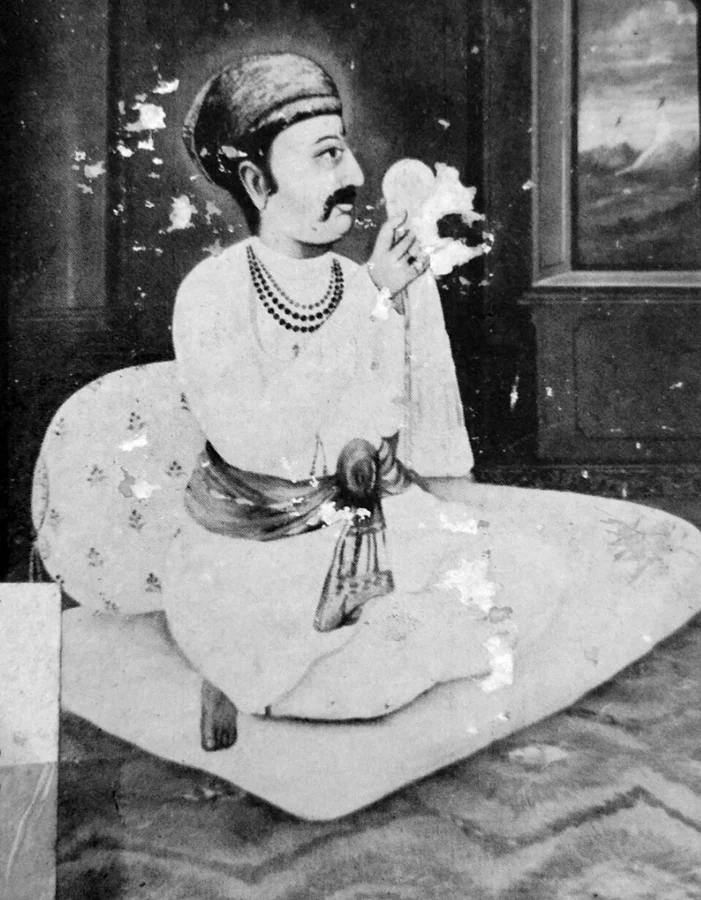
Shantidas Jhaveri — portrait representation
Portrait representation · Unknown authorUnknown author · Public domain. Full credit.

A life in context

A prominent Ahmedabad jeweller and financier, Shantidas used access to the Mughal court in a dispute over the Chintamani Parshvanath temple. A firman of Shah Jahan is part of the documentary trail.

An order returning property is not proof that ritual worship resumed. The historical accounts describe a more limited and troubled outcome.

Beyond these sites

  • A significant merchant and representative of Ahmedabad’s Jain community.

Life and context sources: Shantidas Jhaveri — reference trail · Shah Jahan’s firman to Shantidas Jhaveri, 3 July 1648 — reproduced document · Shantidas Jhaveri — biographical overview.

THE WORK OF PRESERVATION

Places, actions & evidence

3 July 1648 AD · Gujarat

Seeking restitution through an imperial order

Historical account

Shantidas sought the return of temple property after its conversion under Aurangzeb’s governorship.

Shantidas Jhaveri’s role
Petitioner and property claimant
How it happened
Petition and imperial legal intervention under Shah Jahan.
Who helped
Shah Jahan’s court and officials responsible for implementing the order.
What endured
A firman ordered restitution; the historical account does not establish a lasting return to temple worship.

What the evidence leaves open. The scan is identified, but its Persian text has not been independently translated. Restitution is not equivalent to successful religious restoration.

  1. Shah Jahan’s firman to Shantidas Jhaveri, 3 July 1648 — reproduced document ↗
    Document identification and date. Review notes.
  2. Shantidas Jhaveri — reference trail ↗
    Temple dispute and outcome. Review notes.

Read the damage & survival dossier ↗