Statesman · organiser

Sardar Vallabhbhai Patel

1875–1950 AD

Remembered for political integration, Patel also set the post-independence rebuilding of Somnath in motion.

Explore the story ↓
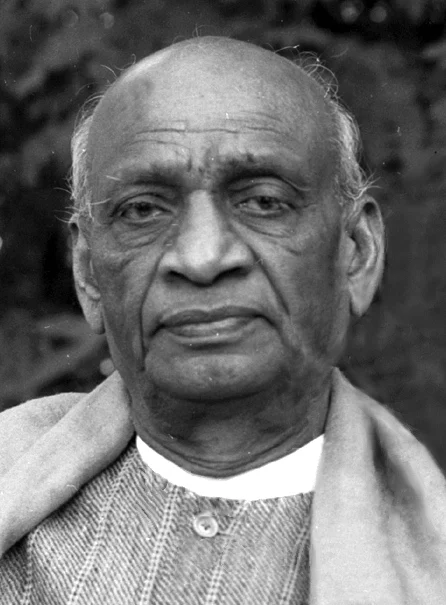
Sardar Vallabhbhai Patel — historical photograph
Historical photograph · Government of India work · Public domain. Full credit.

A life in context

A lawyer from Gujarat, Patel became an organiser of the independence movement, including agrarian campaigns in Kheda and Bardoli. He served as independent India’s first Deputy Prime Minister and Home Minister.

His national significance extends well beyond temple restoration. Working with V. P. Menon and many other officials and political leaders, he helped integrate princely states into the new Indian Union. Accession and subsequent administrative integration were separate processes.

At Somnath in November 1947 AD, he committed himself to rebuilding. He died before the consecration of May 1951 AD. Munshi, the temple trust, royal supporters, architects and craftspeople carried the work forward; the completed temple cannot be credited to Patel alone.

Beyond these sites

  • Played a central role in the integration of princely states.
  • Organised independence-era political and agrarian campaigns.
  • Helped establish the institutions of the new Union.

Life and context sources: Somnath: temple history — Shree Somnath Trust · Somnath: a journey of resilience — PIB · Re-building of Somanath: Patel and K. M. Munshi — Vivekananda International Foundation · Vallabhbhai Patel — biographical overview.

Explore the political story in the 16th August 1947 atlas: British provinces, princely states, accession and the work of integration.

THE WORK OF PRESERVATION

Places, actions & evidence

1947–1951 AD; later building phases · Gujarat

The modern Somnath reconstruction

Documented

A public reconstruction campaign followed Patel’s visit in November 1947 AD. Digvijaysinhji laid the foundation on 8 May 1950 AD; consecration followed on 11 May 1951 AD.

Sardar Vallabhbhai Patel’s role
Launched and championed the project
How it happened
Institutional organisation, donations, architectural planning and skilled construction.
Who helped
K. M. Munshi, the Somnath Trust, U. N. Dhebar, architect Prabhashankar Sompura, craftspeople and donors; Rajendra Prasad performed the consecration.
What endured
The temple was consecrated in 1951 AD, with major later phases. The Trust records a dedication of the fully reconstructed temple in 1995 AD.

What the evidence leaves open. Patel died in 1950 AD. Consecration was not the completion of every part of the building; accounts disagree on the November visit’s day.

  1. Somnath: temple history — Shree Somnath Trust ↗
    Modern temple chronology. Review notes.
  2. Somnath: a journey of resilience — PIB ↗
    Post-independence rebuilding. Review notes.
  3. Re-building of Somanath: Patel and K. M. Munshi — Vivekananda International Foundation ↗
    Organisation and correspondence. Review notes.

Read the damage & survival dossier ↗